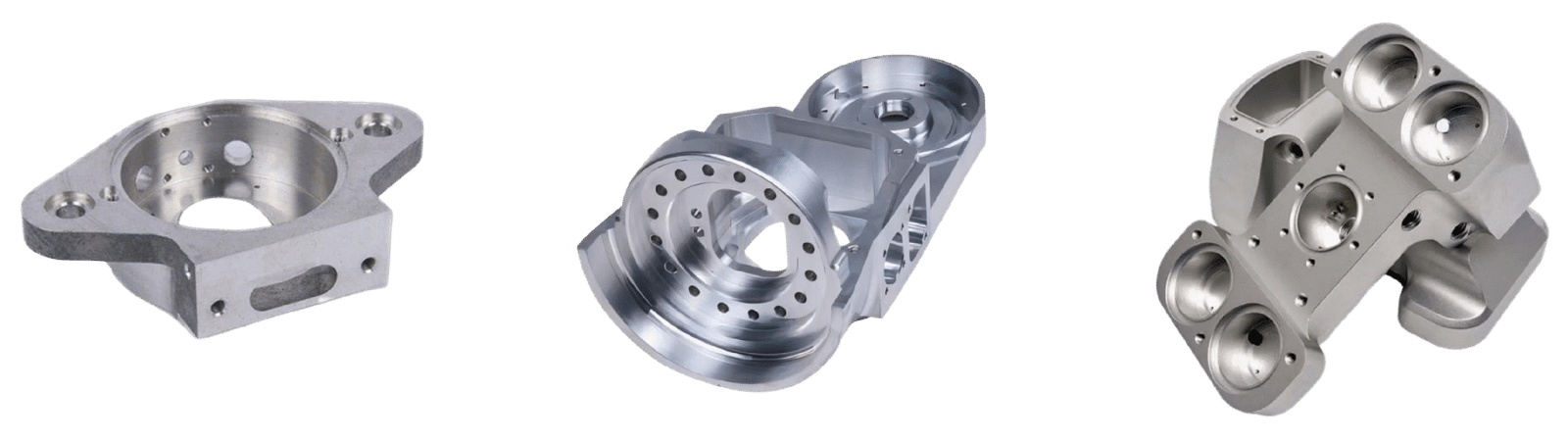
Custom Online CNC Milling Services

On-demand CNC milling services for rapid prototypes and production parts. High precision CNC milling up to 0.008 mm. Milled parts ready in as fast as 1 day. Get an instant CNC quote today.

Start a New CNC Project!
Get an Instant Quote

Bring your product ideas to life quickly and accurately with our expert prototyping services.

CNC Machining Services for Custom Parts

From 3-axis basics to intricate 5-axis projects, our precision CNC milling makes your designs come alive with unmatched accuracy and craftsmanship.
3-Axis CNC Milling
With 3-axis CNC milling, precision meets affordability. It’s your go-to for simple parts that still demand accuracy.
4-Axis CNC Milling
Think of a design, and 4-axis milling can probably make it. Multi-sided machining just got a whole lot simpler.
5-Axis CNC Milling
For those complex and intricate parts, 5-axis milling is the master key. Bring your most ambitious designs to life.

CNC Machining Solutions

RapidDirect

Prototyping

Lewei Prototyping

Leverage our robust manufacturing capabilities for swift, high-quality prototype delivery. Using the latest technology, we ensure Lewei, accurate production, expediting your path from testing to market.

Capability: 20-500

Lead Time: 10 business days

Production

Low and High-Volume Production

Lewei Precision is equipped to handle large-scale production orders. This means they can efficiently produce large quantities of CNC precision machining parts without compromising quality or accuracy.

Capacity: 1000+

Lead Time: 15 business days

CNC Milling Materials

At Lewei Precision, our plastic and metal CNC milling solutions offer a diverse range of materials, ensuring precision and durability. This vast selection empowers our clients with optimal choices for their unique projects, boosting their product’s quality and performance.

Metals

Aluminum is lightweight yet strong, with excellent machinability and corrosion resistance. Ideal for aerospace and automotive parts.

Alloys

Aluminum 6061, 6061-T6

Aluminum 2024

Aluminum 5052

Aluminum 5083

Aluminum 6063

Aluminum 6082

Aluminum 7075, 7075-T6

Aluminum ADC12 (A380)

Copper is known for its superior electrical conductivity and thermal properties, making it perfect for electrical components and heat exchangers.

Alloys

Copper C101(T2)

Copper C103(T1)

Copper C103(TU2)

Copper C110(TU0)

Beryllium Copper

Brass is durable and has a low friction coefficient, which makes it suitable for fittings, tools, and musical instruments that require precision.

Alloys

Brass C27400

Brass C28000

Brass C36000

Bronze is highly resistant to corrosion and metal fatigue, favored for bearings, bushings, and marine hardware.

Alloys

Tin Bronze

Steel is an alloy with high tensile strength and durability, commonly used in construction and automotive industries for its robustness.

Alloy

Steel 1018, 1020, 1025, 1045, 1215, 4130, 4140, 4340, 5140, A36

Die steel

Alloy steel

Chisel tool steel

Spring steel

High speed steel

Cold rolled steel

Bearing steel

SPCC

Stainless steel is renowned for its corrosion resistance, making it a prime choice for medical devices and food processing equipment.

Alloys

Stainless Steel SUS201

Stainless Steel SUS303

Stainless Steel SUS 304

Stainless Steel SUS316

Stainless Steel SUS316L

Stainless Steel SUS420

Stainless Steel SUS430

Stainless Steel SUS431

Stainless Steel SUS440C

Stainless Steel SUS630/17-4PH

Stainless Steel AISI 304

Magnesium is the lightest structural metal, offering high strength-to-weight ratios, perfect for automotive and aerospace applications where weight is critical.

Alloys

Magnesium Alloy AZ31B

Magnesium Alloy AZ91D

Titanium boasts the highest strength-to-density ratio among metals, highly resistant to corrosion and fatigue, ideal for aerospace, medical, and marine applications.

Alloys

Titanium Alloy TA1

Titanium Alloy TA2

Titanium Alloy TC4/Ti-6Al 4V

Plastics

ABS is strong, durable, and offers good resistance to heat and impact. It’s preferred for automotive components and consumer goods.

ABS Beige(Natural)

ABS Black

ABS Black Antistatic

ABS Milky White

ABS+PC Black

ABS+PC White

Polycarbonate is extremely durable and has high impact resistance, along with excellent clarity, used for bullet-proof glass and protective gear.

PC Black

PC Transparent

PC White

PC Yellowish White

PC+GF30 Black

PMMA, or acrylic, is known for its crystal clarity and weather resistance, making it ideal for outdoor fixtures and display cases.

PMMA Black

PMMA Transparent

PMMA White

POM is strong, with a low friction surface and good dimensional stability, perfect for precision parts in mechanical applications.

Dark brown (coffee) POM 100AF

POM Black

POM Blue

POM White

Nylon is versatile, strong, and wears well against friction, commonly used for gears, bearings, and other wear-resistant surfaces.

PA(Nylon) Blue

PA6 (Nylon)+GF15 Black

PA6 (Nylon)+GF30 Black

PA66 (Nylon) Beige(Natural)

PA66 (Nylon) Black

Polyethylene is lightweight and has high resistance to impact, widely used in packaging and containers.

PE Black

PE White

PEEK is renowned for its high temperature resistance and strength, often used in aerospace and medical implant manufacturing.

PEEK Beige(Natural)

PEEK Black

Polypropylene is tough, has excellent chemical resistance, and is used for automotive parts, containers, and in packaging.

PP Black

PP White

PP+GF30 Black

CNC Milling Surface Finishes

Gain access to quality surface finishing for custom CNC milled parts to remove aesthetic flaws and improve the appearance of your products. We also provide rigid protection and additional resistance and strength to your parts through superior surface finishes.

As Machined

As machined finish leaves the surface straight from the CNC machine, providing a cost-effective option with tool marks.

Anodizing

Anodizing increases corrosion resistance and wear properties, while allowing for color dyeing, ideal for aluminum parts.

Polishing

Polishing achieves a high gloss finish, reducing surface roughness and enhancing the aesthetic appeal of metals.

Sand Blasting

Sand blasting uses pressurized sand or other media to clean and texture the surface, creating a uniform, matte finish.

Tumbling

Tumbling smooths and polishes small parts by friction and abrasion in a barrel, offering a consistent but slightly textured finish.

Electropolish

Electropolish is a chemical process that smooths and brightens surfaces while improving corrosion resistance.

Alodine

Alodine coating provides corrosion protection and improves paint adhesion, mainly used on aluminum surfaces.

Heat Treatment

Heat treatment alters the mechanical properties of metal to increase its hardness, strength, or ductility..

Brushed Finish

A brushed finish creates a unidirectional satin texture, reducing the visibility of marks and scratches on the surface.

Powder Coating

Powder coating applies a thick, wear-resistant layer with excellent color and texture options, suitable for a variety of surfaces.

Electroplating

Electroplating bonds a thin metal layer onto parts, improving wear resistance, corrosion resistance, and surface conductivity.

Black Oxidize

Black oxidize is a conversion coating for ferrous metals that improves corrosion resistance and minimizes light reflection.

rapiddirect Platform

Start Your
CNC Machining Project

Start your project with our easy-to-use platform for CNC parts online quoting. Upload a CAD file to receive instant quotes, lead times, and DFM details for your CNC components. Specializing in CNC machining for metals and plastics, we offer adaptive production and shipping solutions to align with your product development needs.

WHY

CHOOSE US

With Lewei Precision, CNC milling service online, you’re investing in more than just machinery. You get the promise of impeccable precision, adherence to tight schedules, and the support of seasoned professionals for all your custom CNC milling needs.

/01

High Quality Parts

Our ISO-certified CNC machining ensures precision and quality. Every part is made to fit perfectly and perform flawlessly with advanced quality control at every step.

/02

Fast Lead Time

Accelerate your manufacturing cycle. RapidDirect domestic workshops and state-of-the-art machinery guarantee fast turnaround times, helping businesses maintain momentum.

/03

Engineering Support

No matter you whenever and whereever, navigate your CNC milling projects with confidence. Our seasoned specialists offer insightful guidance at every step, maximizing design optimization.

How CNC Milling Works?

CNC milling is a precise manufacturing process that involves removing material from a workpiece using rotating cutting tools. The process begins with a digital design, typically created in CAD software. This design is then converted into a CNC program, which dictates the movements of the milling machine.

The workpiece is securely fastened to the machine’s table, and the cutting tool, mounted on a spindle, rotates at high speeds. The machine follows the programmed path, making precise cuts to shape the material into the desired form. CNC milling can create complex shapes and features, such as slots, holes, and contours, with high accuracy.

Three-axis milling moves the tool along the X, Y, and Z axes. Four-axis milling adds rotation around one axis, while five-axis milling allows rotation around two axes, enabling more intricate designs. This versatility makes CNC milling essential in various industries, from aerospace to medical devices.

Advantages

Advantages of Precision Machining

Precision machining offers significant benefits by producing parts with exceptional accuracy.

Applications

Applications of Precision Machining

Various industries rely on precision CNC machining services to create specialized parts, including:

FAQ
What kinds of CNC milling machines does Lewei Precision,have?

At Lewei Precision,, we have a variety of CNC milling machines to meet diverse manufacturing needs. Our inventory includes 3-axis, 4-axis, and 5-axis CNC milling machines.

The 3-axis machines are perfect for simple operations, handling basic cutting tasks along the X, Y, and Z axes.

Our 4-axis machines add an extra rotational axis, allowing for more complex geometries and more efficient production of parts with features that require continuous machining around a fourth axis.

Finally, our advanced 5-axis CNC milling machines offer the highest level of precision and versatility, enabling the creation of intricate parts with complex shapes and angles.

These machines are capable of machining in five different axes simultaneously, reducing the need for multiple setups and ensuring exceptional accuracy and quality in every component we produce.

RapidDirect offers comprehensive CNC milling capabilities tailored to various industry needs. We can machine parts with maximum dimensions of 4000 x 1500 x 600 mm and minimum dimensions of 5 x 5 x 5 mm, accommodating a wide range of project sizes. Our milling machines can work with various materials, including metals, plastics, and composites. We achieve tight tolerances, typically ±0.01 mm for 5-axis milling, ensuring precision and consistency. Our lead times are competitive, ranging from 3-7 days for simpler 3-axis tasks to 7-14 days for more complex 5-axis projects. We also provide additional services such as surface finishing, heat treatment, and quality inspection to ensure that every part meets the highest standards of quality and performance.

CNC milling and CNC turning are both subtractive manufacturing processes, but they differ in how the material is removed.

In CNC milling, the workpiece is stationary, and the cutting tool moves across multiple axes to remove material and create the desired shape. This process is ideal for complex parts with various features such as slots, holes, and contours.

On the other hand, CNC turning involves rotating the workpiece while a stationary cutting tool removes material. This method is best suited for producing cylindrical parts, such as shafts, rings, and bolts. While milling can handle more complex geometries, turning is typically faster and more efficient for producing round parts.

CNC milling and CNC routing both involve cutting materials using computer-controlled machines, but they serve different purposes.

CNC milling machines are designed for precision work with metals, requiring high rigidity and the ability to handle significant cutting forces. They are used for producing intricate and complex parts with tight tolerances.
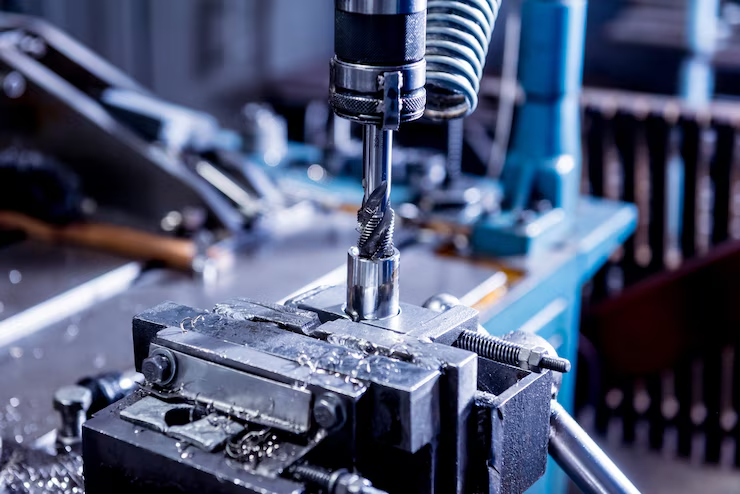
CNC routers, however, are typically used for softer materials like wood, plastics, and composites. They operate at higher speeds and are ideal for cutting larger sheets into parts with less emphasis on precision. Routers often feature a gantry-style design, allowing for quick and efficient handling of large workpieces, while milling machines focus on detailed, accurate machining.
When a 3D model or drawing does not specify a particular fillet size, standard practice is to add fillets with a radius that balances strength and machinability.

Typically, fillets with a radius of 1/3 to 1/5 of the cavity depth are added. For general purposes, a fillet radius of around 1 mm to 3 mm is commonly used. This size helps to reduce stress concentrations and improve the overall durability of the part.

However, the exact size can vary based on the material being used and the specific requirements of the part. Larger fillets are often preferred for softer materials, while smaller fillets may be used for harder materials to ensure structural integrity without compromising precision.

Vertical CNC milling machines, with their vertically oriented spindles, are ideal for precision work on smaller components, offering excellent visibility and versatility for tasks like drilling and boring. Horizontal CNC milling machines, featuring horizontally oriented spindles, excel in handling larger, heavier workpieces and provide enhanced stability and efficient chip removal. For projects requiring extensive material removal and high durability, horizontal milling is preferred. In contrast, vertical milling is best for intricate, detailed work. Choosing between these types depends on your specific CNC milling services needs, whether for precision or bulk machining.

In CNC milling, tool offset refers to the adjustment made to account for the tool’s dimensions—specifically its length and diameter—during the machining process. These offsets ensure that the cutting tool operates with precision relative to the workpiece. By accurately setting tool offsets, a machinist can determine the correct starting point for machining, ensuring that the part is cut to the exact specifications required. Proper tool offsets are crucial for achieving accurate and consistent results in CNC milling operations.

5-axis CNC machining refers to a process where a CNC milling machine can move a cutting tool along five different axes, allowing for highly complex and precise machining. In this setup, the X, Y, and Z axes correspond to the basic linear movements found in a 3-axis machine. Additionally, the table can rotate around the A-axis, similar to a 4-axis machine. The key difference with a 5-axis machine is its ability to pivot the table or tool head around a fifth axis, the C-axis, enabling the tool to approach the workpiece from virtually any direction. This capability makes 5-axis CNC machines ideal for creating intricate parts with complex geometries, as it allows for machining multiple surfaces in a single setup.

CNC mills can work with a diverse range of materials. Metals frequently used include aluminum, brass, and steel, each offering different properties for various applications. Additionally, CNC milling is effective on various plastics such as ABS, acrylic, polycarbonate, and polypropylene, which are valued for their versatility and ease of machining. This variety of materials allows CNC mills to be employed in numerous industries, from aerospace to consumer products, making them a highly adaptable tool for manufacturing.

Resources

CNC Milling

Get In Touch With Us!
Prompt response guaranteed within 12 hours
🔐 All uploads are secure and confidential